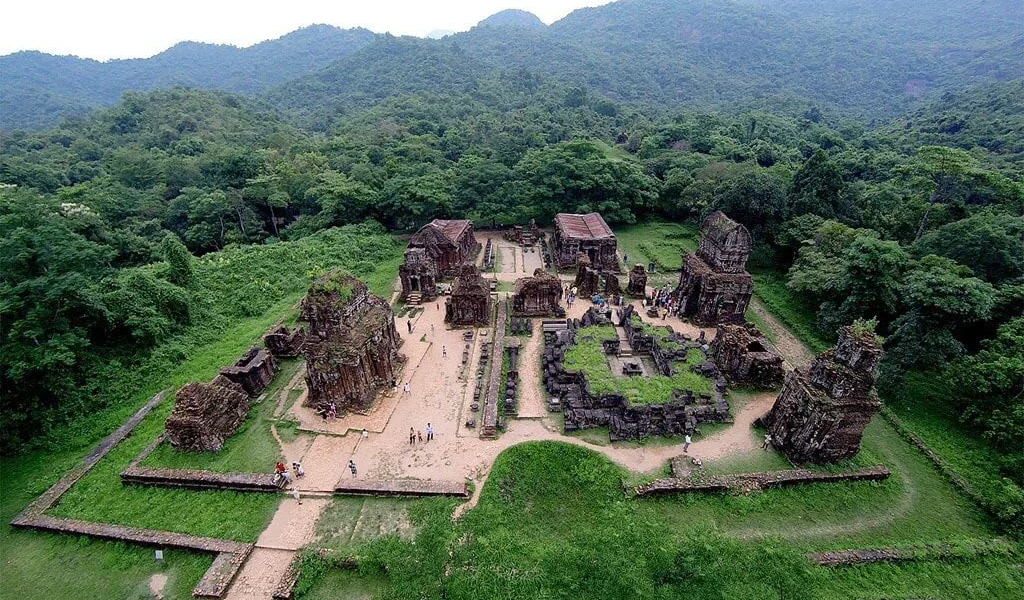
My Son Sanctuary is not only the most important temple complex of the ancient Champa kingdom, but it also contains incredibly unique historical, cultural, architectural, and artistic values.
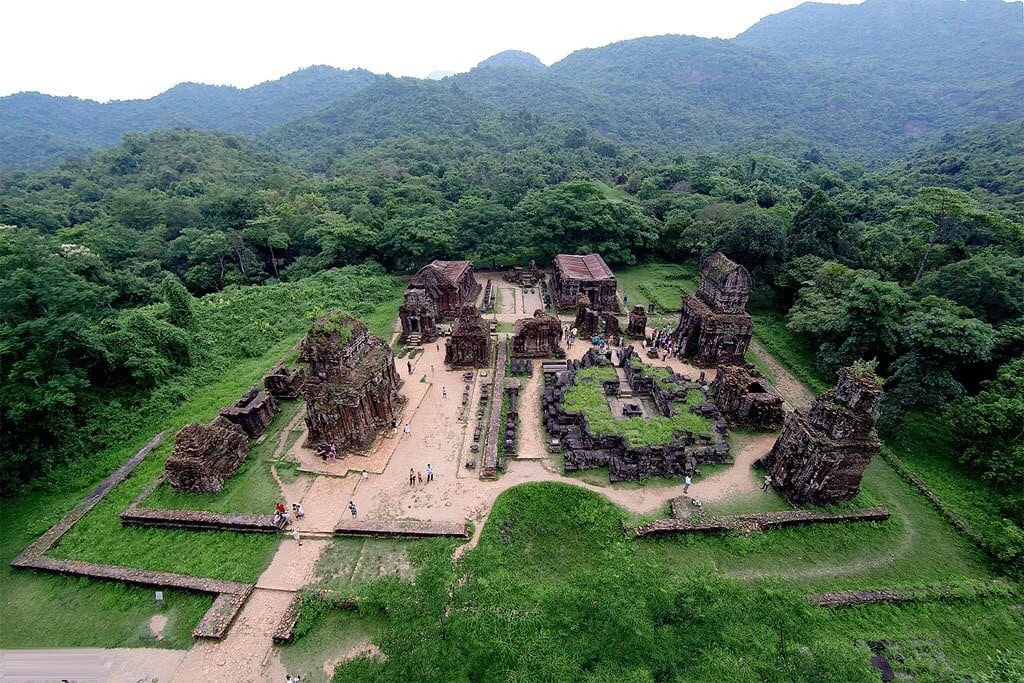
The historical landmark of My Son
Nestled deep in a valley surrounded by towering mountains and forests, completely isolated from the hustle and bustle of the city, My Son Sanctuary ( Da Nang City) exudes a sacred and ancient atmosphere, clearly reflecting the unique characteristics of the Cham Pa culture from millennia ago.
In the past, My Son was a place where people offered sacrifices and also housed the tombs of the Champa kings of that era.
Built in the 4th century by the Champa king Bhadresvara, this temple was initially constructed to worship the gods Shiva and Linga. It also served as a burial place for powerful kings and enlightened monks of Champa.
But two centuries later, the temple suffered a major fire and was completely destroyed. It wasn’t until the early 7th century that King Sambhuvarman rebuilt it with bricks. Since then, it has been continuously repaired and preserved to this day.
In 1999, the My Son Sanctuary was recognized by UNESCO as a World Heritage Site. Since then, My Son has been included in the list of famous tourist destinations in Central Vietnam, attracting hundreds of visitors.
The mystery of the ancient Champa people’s brick tower construction techniques.
The My Son Sanctuary complex is a testament to the worship of Hindu deities, especially Shiva, and the flourishing of a civilization that once thrived on the shores of the East Sea.
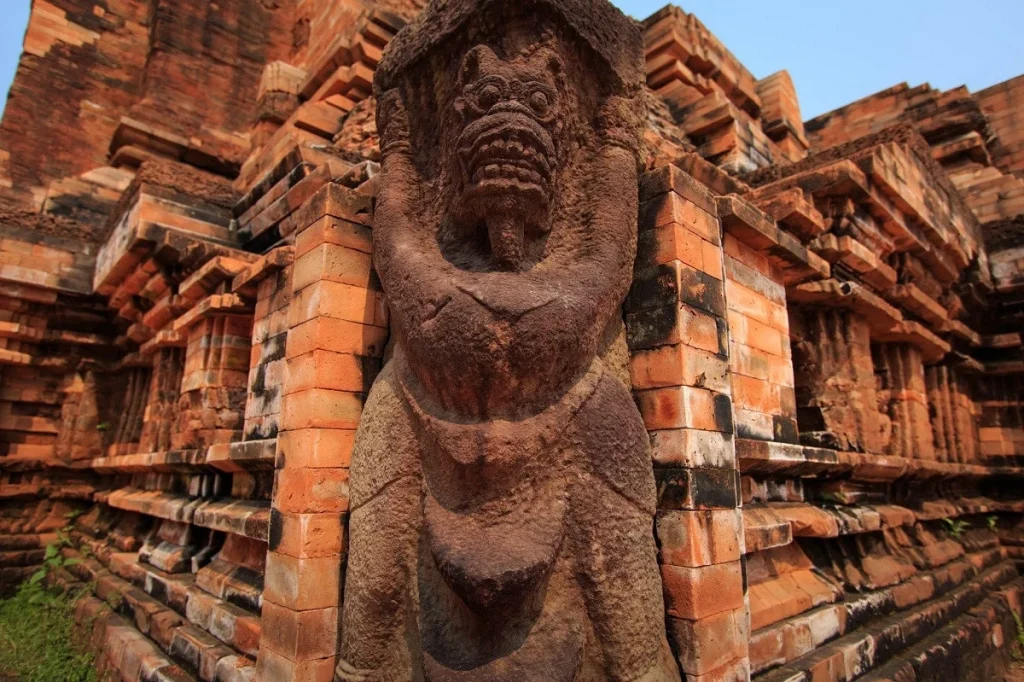
However, what amazes tourists and archaeologists most is that the brick towers have remained standing for thousands of years despite the complete absence of any visible traces of binding material.
The art of carving directly onto bricks is also a pinnacle of creativity of the ancient Cham craftsmen.
Instead of carving on separate stone slabs and then assembling them, the Cham people typically built the basic structure with bricks first, and then artisans directly carved images of deities, Apsara dancers, or intricate vine patterns onto the brick wall surface.
This requires absolute precision and extremely uniform quality of bricks to prevent crumbling during construction. These reliefs, not only decorative but also a means of conveying concepts of cosmology and Hindu mythology, transform each tower into a symbol of the legendary Mount Meru – the abode of the gods.
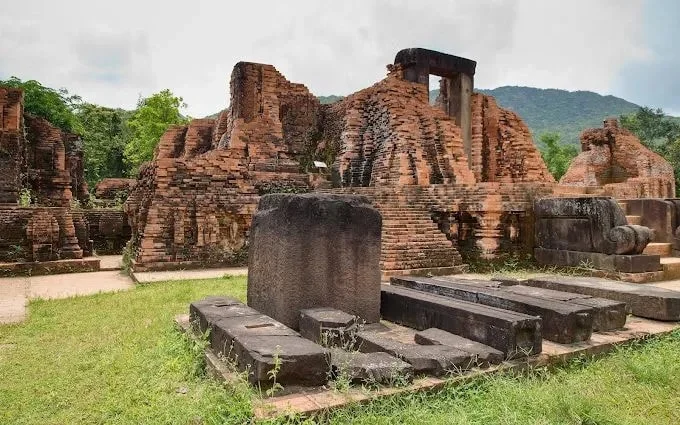
Having endured the devastating effects of war and natural disasters, the My Son Sanctuary now retains only a small fraction of its original scale, but what remains is still enough for humanity to bow before a transcendent architectural genius.
Current conservation efforts are being carried out with the support of international experts, particularly through a combination of manual restoration techniques and 3D laser scanning technologies to preserve the original state of the tower complexes.
Today, My Son is not just a historical ruin, but an open-air museum that tells the story of the power of spiritual belief and the human ability to master materials, forever remaining a source of pride for Vietnam’s and the world’s cultural heritage.
Source: vietnamnet.vn