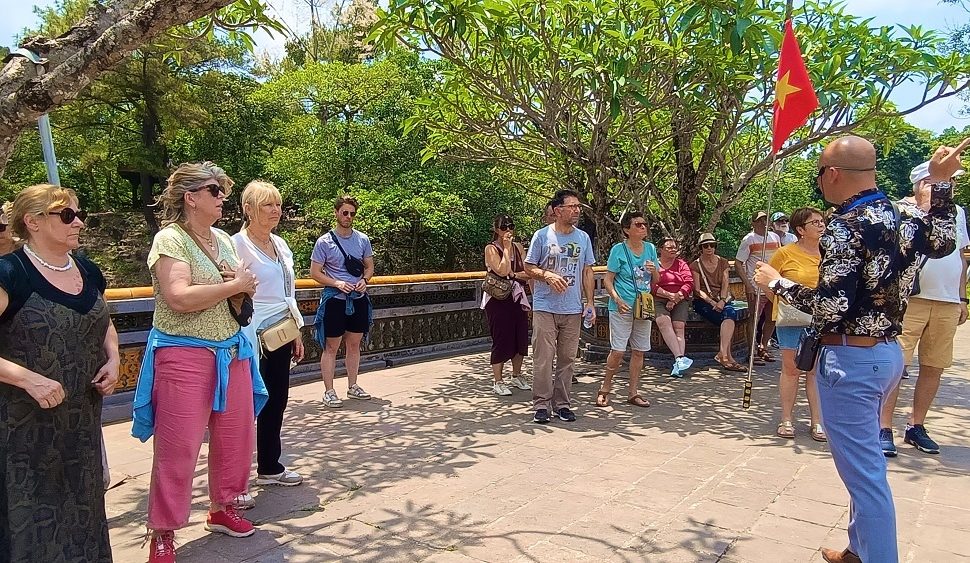
(TITC) – On 9 November, in Lucerne, Switzerland, Vice Chairwoman of the Vietnam National Authority of Tourism (VNAT) Nguyen Thi Hoa Mai and the Vietnamese delegation had a technical exchange with representatives of the Lucerne University of Applied Sciences and Arts (HSLU), the Swiss Tourism Federation, Lucerne Tourism AG and RigiPlus AG.
The meeting took place as part of the Vietnam-Switzerland Bilateral Dialogue Programme on Sustainable Tourism Development.
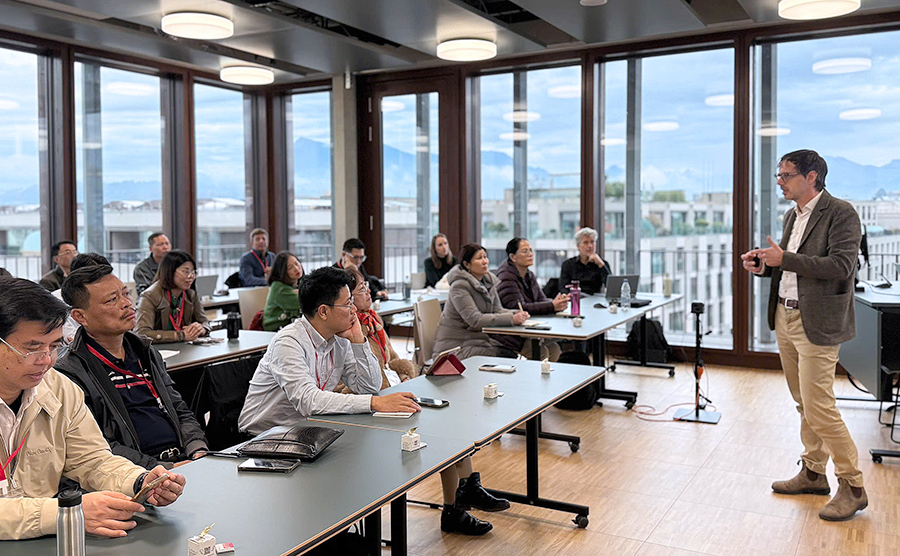
The Swiss State Secretariat for Economic Affairs (SECO); the Embassy of Switzerland in Vietnam; the ST4SD Project; and the Departments of Culture, Sports and Tourism of Tuyen Quang, Da Nang and Dong Thap. Representatives of the tourism associations of Tuyen Quang and Dong Thap, as well as universities and tourism training institutions, also attended.
Vietnam Itinerary 9 Days: South to North
The discussions focused on sustainable tourism development, innovation and destination management, Switzerland’s Swisstainable programme for sustainable tourism, and field visits to Vitznau and Rigi.
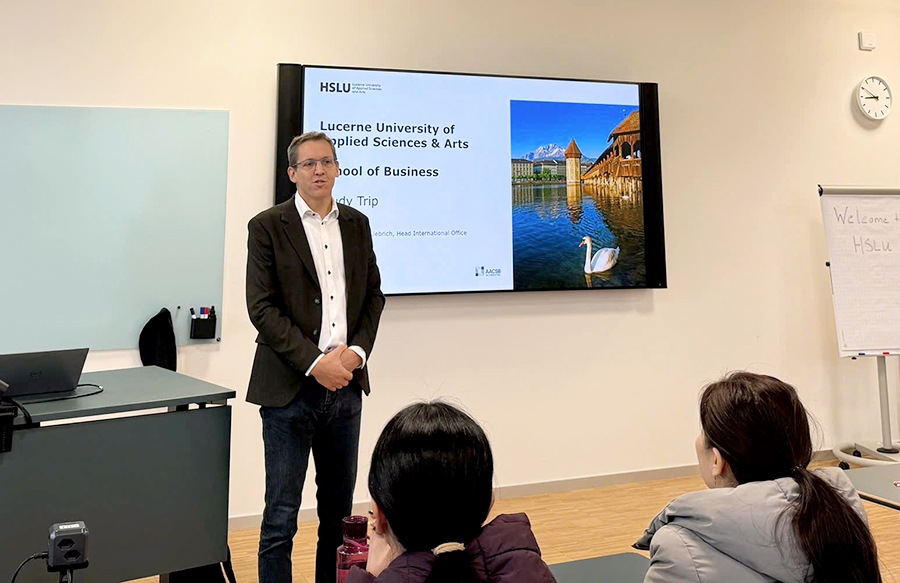
At the meeting, Mr. Andreas Liebrich, Head of International Relations at HSLU, provided an overview of the university’s scale, organisational structure and key areas of operation.
According to 2024 figures, HSLU had more than 8,000 students enrolled in bachelor’s and master’s degree programmes, alongside over 12,000 participants in continuing education courses.
The university comprises six schools covering engineering and architecture, business, information technology, social work, design, film and art, music, and health sciences. It currently offers 30 bachelor’s programmes across 70 specialisations and 21 master’s programmes covering 45 specialisations.
HSLU’s activities are organised around four core areas: degree education, continuing education, research and development, and services.
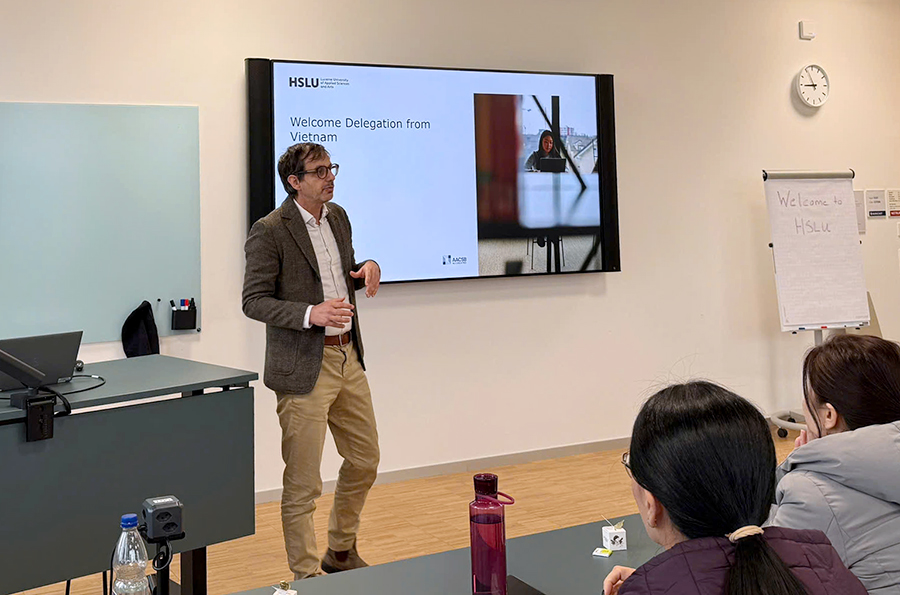
Mr. Florian Eggli, Director of the Institute of Tourism and Mobility (ITM), shared the Institute’s strategic direction and specialist areas. ITM places tourism and transport ecosystems at the centre of its work, seeking to connect project partners, clients and relevant stakeholders.
Vietnam Highlights Tour 11 Days
Its expertise is concentrated in six key areas: consumer behaviour; sustainability; strategy and product development; data and analytics; digital transformation and artificial intelligence; and impact measurement.
These areas are pursued through four core functions: degree education, continuing education, research and services. This integrated approach helps bridge the gap between academic research and practical applications while supporting partners across the tourism and mobility sectors.
Sharing insights into destination management, Mr. Marcel Perren, Director of Lucerne Tourism AG, said that Lucerne places strong emphasis on building a destination brand around its distinctive values, with the positioning of the “City of Lights” serving as a notable example.
Tourism management and promotion are designed to regulate visitor flows and make effective use of the destination’s potential throughout the year.
During the peak summer season, hotel occupancy rates in Lucerne typically reach around 90-95%, while visitor numbers are lower in winter. To address seasonality, the destination focuses on attracting business travellers and leisure visitors, while leveraging events and festivals in January and February. It also promotes its Christmas tourism appeal, drawing on the scenic combination of lakes and mountains to enhance its attractiveness during the low season.
In terms of international promotion, Lucerne Tourism AG conducts approximately 450 promotional activities across 20 countries to raise the destination’s profile and attract international visitors.
Mr. Perren also highlighted the importance of data-driven destination management, particularly the identification, collection and consolidation of reliable data sources. Such information is essential for assessing current conditions, understanding visitor demand and supporting improvements in tourism infrastructure.
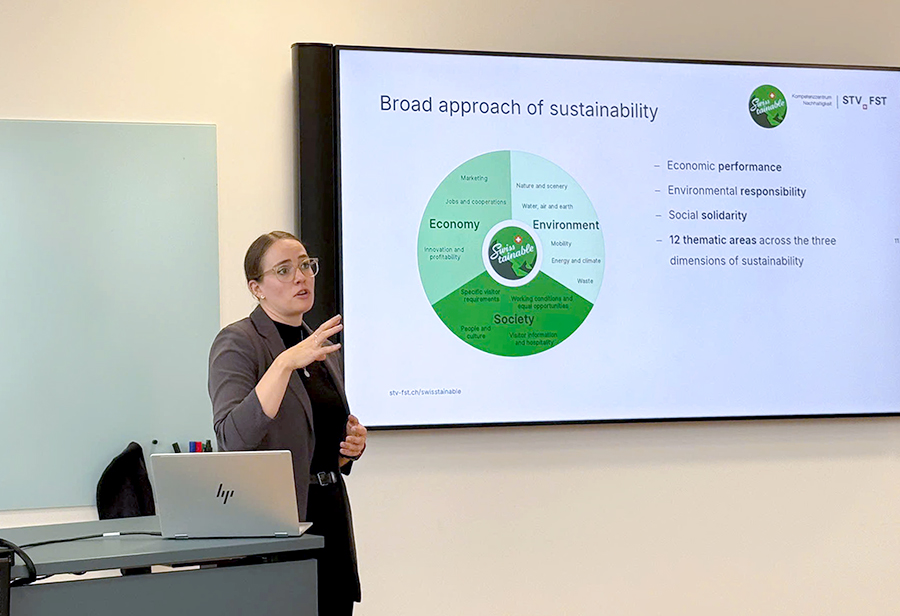
Introducing Swisstainable, Switzerland’s sustainable tourism programme, Ms. Romy Bacher of the Swiss Tourism Federation explained that it serves as an overarching framework for sustainable tourism development across the country’s tourism industry.
Rather than establishing an entirely new green certification, Swisstainable functions as a common classification system that enables travellers to identify the level of sustainability practices adopted by tourism businesses and organisations. It also provides a structured pathway for participating entities to progressively strengthen their environmental, social and economic responsibilities.
The programme covers a wide range of sectors across the tourism value chain, including accommodation providers, restaurants, transport operators, cable car companies, destination management organisations, tourist offices, museums and event organisers. Its scope also extends to cities and tourism regions.
One of Swisstainable’s key features is its three-tier classification system: Committed, Engaged and Leading, reflecting the respective levels of sustainability performance achieved by participating organisations.
This tiered approach allows both businesses at the initial stages of their sustainability journey and those with established sustainable tourism practices to participate, while providing opportunities for continuous improvement.
Swisstainable’s activities are built around three pillars.
The first is environmental protection, encompassing energy and water efficiency, waste reduction and nature conservation.
The second is social responsibility, focusing on improving working conditions, preserving local cultural heritage and strengthening community support for tourism development.
The third is economic sustainability, which aims to generate greater value for local communities, prioritise local products and create stable, year-round employment opportunities.
For travellers, the programme encourages more responsible choices, including using public transport, extending their stays, enjoying seasonal local cuisine, respecting the natural environment and prioritising businesses participating in the initiative.
In Lucerne, the local tourism authority actively encourages businesses to join Swisstainable, organises experience-sharing activities and promotes public transport use among visitors. One notable measure is the provision of free public transport tickets for tourists staying at least two nights.
Through these initiatives, the programme helps translate sustainability principles into practical business operations and more responsible travel choices.
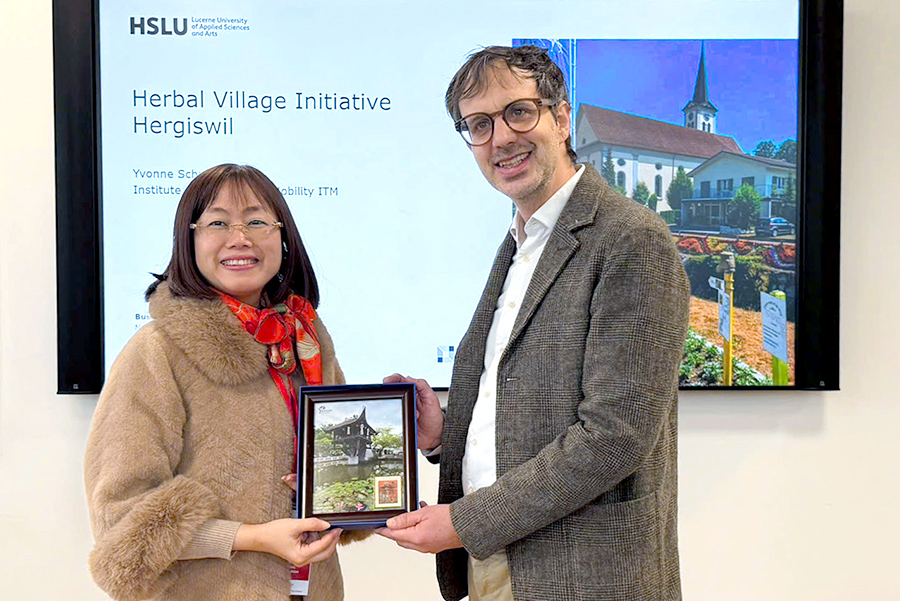
The programme also featured discussions on overtourism, the Hergiswil Herb Village initiative, innovation and tourism start-up initiatives.
On the same day, the delegation continued its field programme in Vitznau and Rigi, visiting the Lok7 exhibition, exploring the Mythos Rigi hiking trail and learning about sustainable tourism development and community participation in tourism activities.
Tourism Information Technology Center