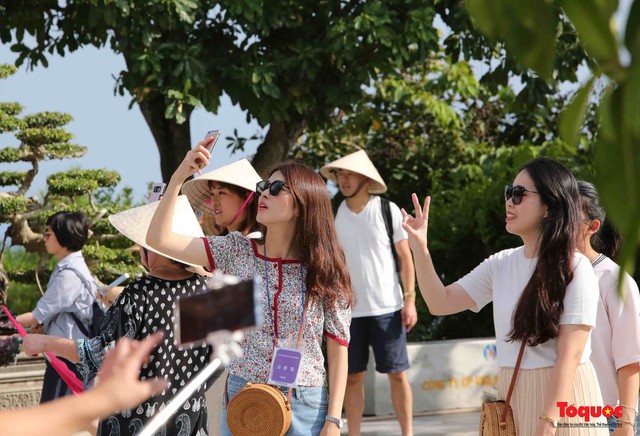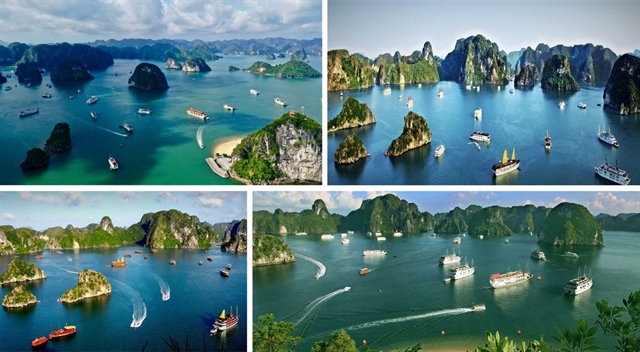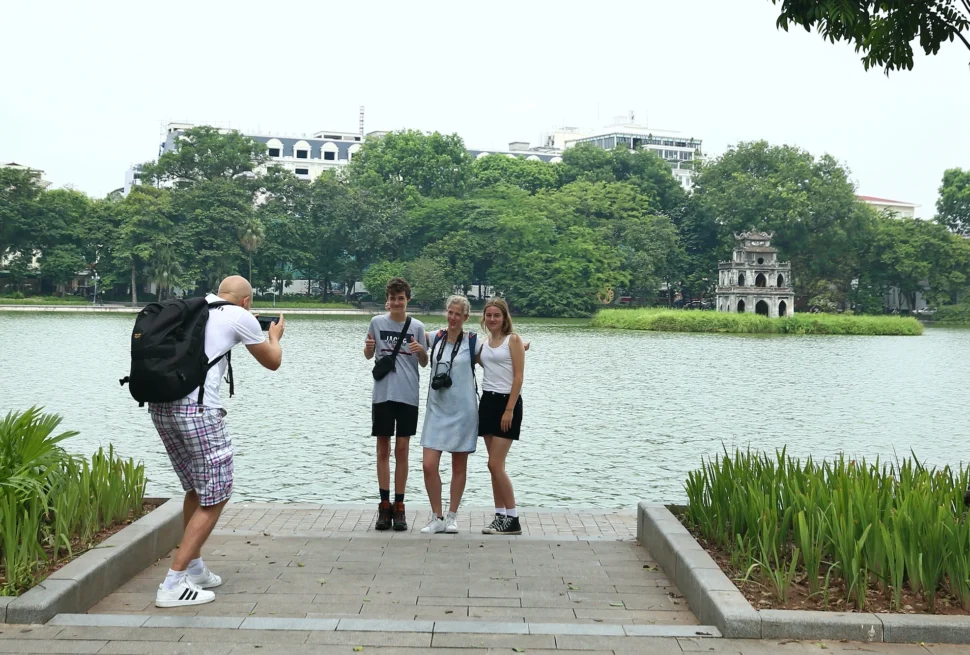
(TITC) – According to figures released by the National Statistics Office on October 3, Vietnam welcomed more than 17.7 million international visitors in the first nine months of 2026, up 14.5% year on year. In September alone, international arrivals reached 1.77 million, an increase of 16.1% from the same period last year.
Of the total international arrivals, 83.2% travelled by air, 15.4% by land and 1.4% by sea. This structure underscores the continued dominant role of international air connectivity in attracting visitors to Vietnam.
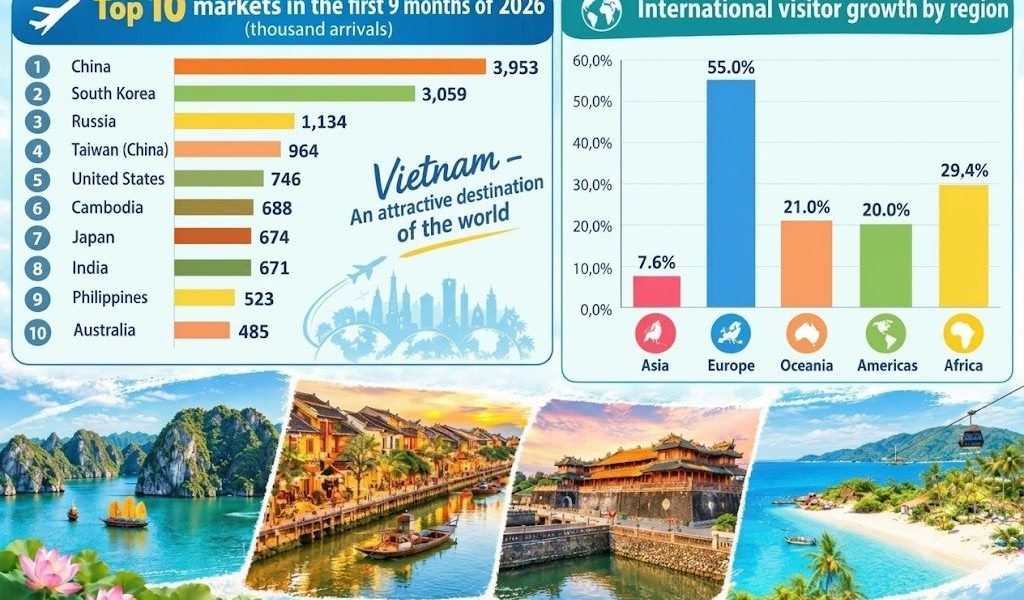
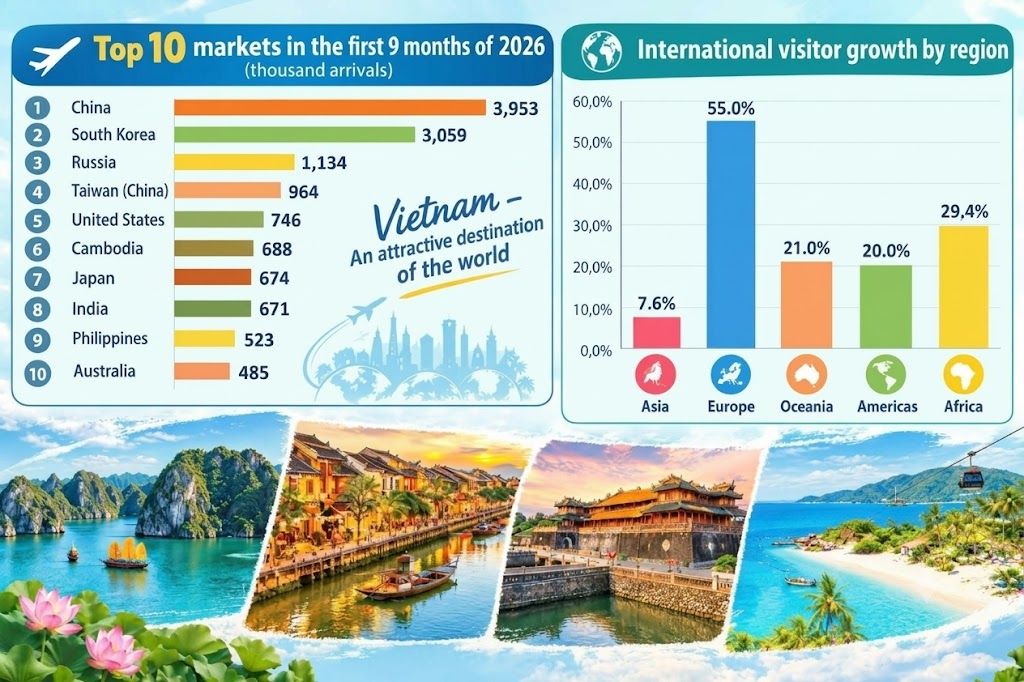
During the nine-month period, China and the Republic of Korea remained Vietnam’s two largest source markets, together accounting for nearly 40% of total international arrivals. China ranked first with 3.9 million visitors, or 22.4%, followed by the Republic of Korea with 3.0 million, or 17.3%. These two markets benefit from large populations, geographic proximity, convenient air connectivity and diverse travel demand, generating substantial visitor flows for Vietnam’s beach, resort, urban, shopping, culinary, entertainment and leisure products.
Russia ranked third with around 1.1 million visitors, making it the largest European source market. Taiwan (China) ranked fourth with 964,000 visitors, followed by the United States with 764,000.
The remaining markets in the top 10 were Cambodia with 688,000 visitors, Japan with 674,000, India with 671,000, the Philippines with 523,000 and Australia with 485,000.
Vietnam Itinerary: South To North
By region, Europe recorded the highest growth at 55.0%, followed by Oceania at 21.0%, the Americas at 20.0%, Africa at 29.4% and Asia at 7.6%. Simultaneous growth across multiple regions is helping Vietnam diversify its visitor base, strengthen the tourism sector’s resilience and expand its growth potential.
Europe, the fastest-growing region, saw Russia remain its largest source market, with more than 1 million visitors and growth of 160.6%. The market has strong demand for beach holidays, extended stays and winter escapes, while benefiting from air connectivity between the two countries and Vietnam’s growing capacity to serve visitors at its resort destinations.
Other European markets also posted solid growth, including France (+13.6%), the UK (+9.7%) and Germany (+16.1%). Meanwhile, Poland grew strongly by 49.0%, followed by Czechia (+26.6%), Belgium (+19.5%), Sweden (+23.6%) and Switzerland (+25.7%).
The sustained strong growth of European markets since the beginning of 2026 is a positive sign of the effectiveness of efforts to tap quality segments characterised by longer stays and higher spending, with strong demand for cultural and heritage tourism, nature, cuisine, resort holidays and immersive experiences.
Asia continued to be Vietnam’s most important source region, accounting for 74.5% of total international arrivals. However, growth was more modest at 7.6%, largely due to slower performance in major Northeast Asian markets. China grew by 1.5%, while the Republic of Korea declined by 5.5% and Taiwan (China) increased by just 4.1%.
At the same time, more positive momentum was recorded in Southeast Asian markets. Arrivals from the Philippines surged 55.2%, followed by Cambodia (+40.5%), Singapore (+29.8%), Indonesia (+25.5%), Malaysia (+18.1%) and Thailand (+10.1%). Two promising markets, India (+33.0%) and Australia (+21.0%), also continued to post strong growth.
Vietnam stands out amid challenges facing international tourism
Vietnam’s tourism growth is particularly noteworthy against a backdrop of continued uncertainty in international and regional tourism, including geopolitical risks, global economic difficulties, rising transport and energy costs, intensifying competition among destinations and rapidly changing traveller preferences.
According to the latest report from UN Tourism, international tourism worldwide grew by a modest 0.4% in the first half of 2026. Against this challenging backdrop, the organisation lowered its forecast for international tourist growth in 2026 to 1%-2%, down from the 3%-4% forecast issued in January.
In this context, Vietnam’s double-digit tourism growth during the first nine months of 2026 highlights the strengthening appeal of the destination, underpinned by safety and stability, proactive market diversification, a diverse tourism product offering, convenient air connectivity and steadily improving service capacity.
This positive momentum is also reflected in the latest report released by the World Economic Forum (WEF) on September 25. Vietnam’s Travel & Tourism Development Index (TTDI) score reached 4.15 in 2026, up 6.3% from 2024 – the second-highest improvement globally. Vietnam climbed seven places to rank 52nd worldwide.
These encouraging results indicate that Vietnam’s tourism sector is gradually shifting towards deeper development, with greater emphasis on quality and sustainable growth. This provides a foundation not only for increasing visitor numbers, but also for extending stays, raising visitor spending, enhancing the quality of travel experiences and generating greater added value from tourism.
Tourism Information Technology Center